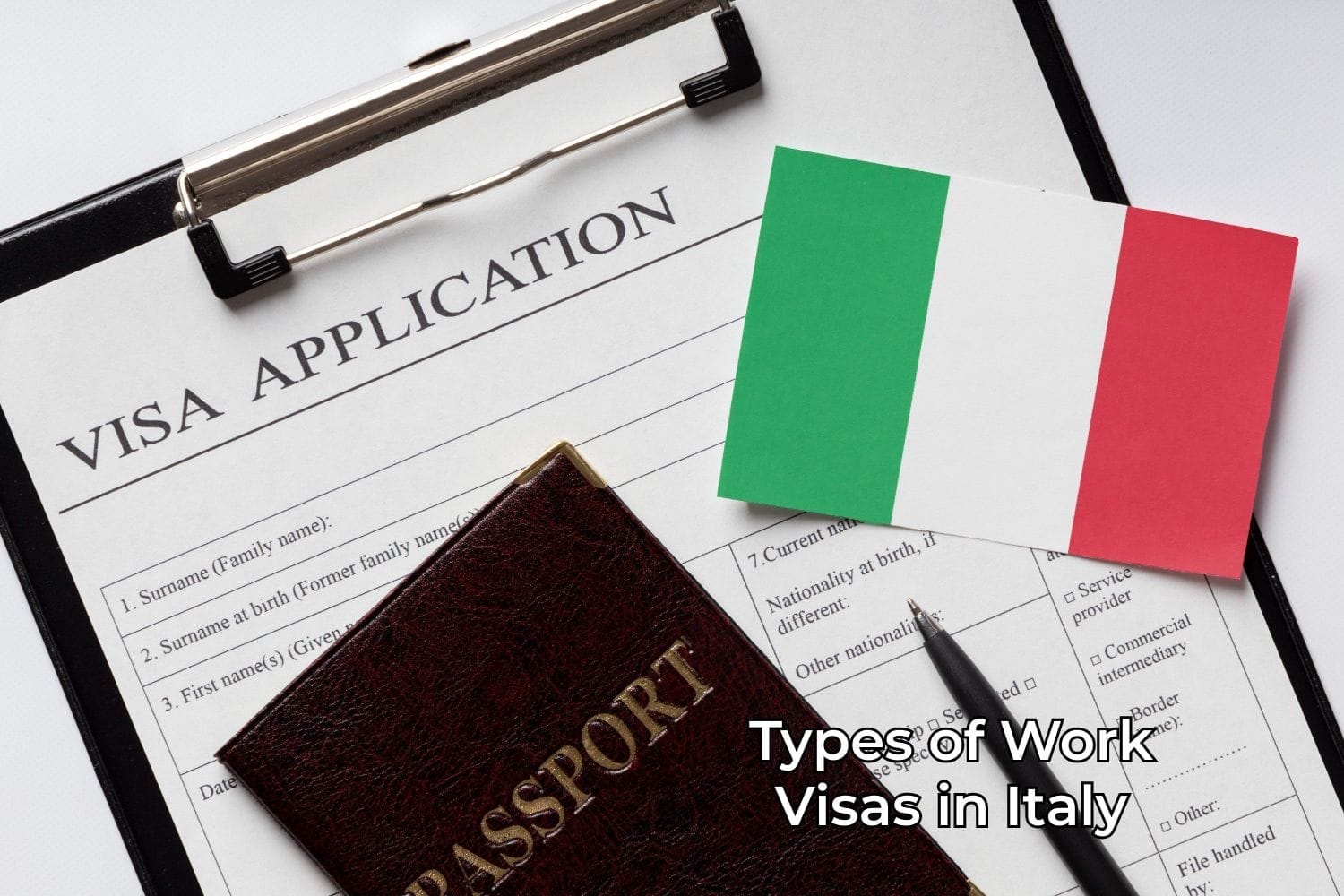
Italy is known not only for its architecture and cuisine but also for offering employment opportunities for foreigners. In major cities like Milan and Rome, you can find numerous international organizations ready to hire professionals who speak English. In this article, we’ll explore the types of work visas available, how to obtain them, and key points to keep in mind.

How to Obtain a Work Visa for Italy

To work in Italy, you must first apply for a visa at the Italian consulate in your home country. Once you arrive in Italy, you need to apply for a residence permit (Permesso di Soggiorno).

There are several grounds on which a work visa can be issued. The simplest option is seasonal work (e.g., harvesting). The most complex involves long-term employment for executives or business owners. There is also a simplified process for highly qualified professionals. In some cases, entry with a tourist visa followed by conversion to a work visa may be possible.

Decreto Flussi: How Do Quotas Work?

The Italian government updates quotas for work visas annually through the "Decree on Migration Flows" (Decreto Flussi). You can apply for a work permit if:

  • The Decreto Flussi is open and quotas have not been exhausted;
  • You have an Italian employer willing to submit an application to the immigration office;
  • Your application for a work permit is approved.

Main Types of Work Visas in Italy

  1. Type C Visas (Lavoro Autonomo and Lavoro Subordinato)
    Issued for up to 90 days. Suitable for seasonal and temporary work. However, these visas do not grant long-term residence rights or access to public services.
  2. Schengen Visas (Category C1, C2, C3) – Lavoro Autonomo and Lavoro Subordinato
    Issued for 1–3 years, suitable for business trips and short-term employment.
  3. National Visas (Category D) – Lavoro Autonomo and Lavoro Subordinato
    Valid for 90 days to 1 year. Must be converted into a residence permit to continue working. These visas are valid only for Italy and do not allow free movement within the EU.
  4. Visa for Entrepreneurs and Self-Employed (Libero Professionista)
    Issued under special quotas. The residence permit is valid for 2 years and can later be converted into a standard employment permit.
  5. EU Blue Card (Carta Blu)
    A simplified procedure for attracting highly paid professionals. The employer handles the documentation, including obtaining a nulla osta (work authorization). Requirements include:The Blue Card is aimed at rare and in-demand professions such as consultants, designers, and financial analysts. Full lists of eligible professions can be found on the ISTAT website.
    • A higher education degree;
    • A valid employment contract with an Italian employer;
    • An annual salary of at least €24,789;
    • A position that falls under the highly qualified category.
  6. Student Residence Permit and Its Conversion
    A student residence permit allows work for up to 20 hours per week year-round or 40 hours per week for up to 6 months. After graduation, it can be converted into a job search permit (valid for 1 year), and subsequently into a work permit.

This post is for paying subscribers only

Sign up now and upgrade your account to read the post and get access to the full library of posts for paying subscribers only.

Sign up now Already have an account? Sign in